It was always there.
It started with a milk bottle at breakfast. Staring at the QR code on the side, half-awake — something in the scatter of black modules looked like a shape. Not quite a face, not quite a symbol. Just a nagging feeling that something was hiding in there.
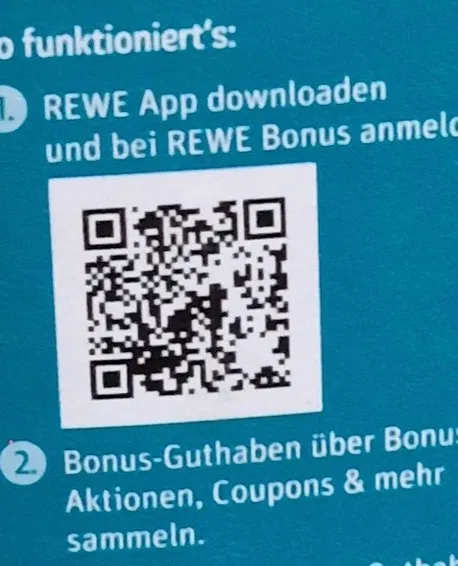
The milk bottle that started it all.
That feeling has a name: pareidolia — the tendency to perceive a meaningful image in a random or ambiguous pattern. We see faces in clouds, figures in static, animals in the grain of wood.
QR codes encode data in a grid of black and white modules, but around 30% of those modules are reserved for error correction — bits the scanner can afford to lose. That budget can be steered. With the right algorithm you can nudge those free modules to form a silhouette, while the code still scans perfectly.
pareidolia is a tool for making these. Upload a high-contrast image — a cat, a face, a skyline — and the algorithm weaves its shape into a valid, scannable QR code. Print it. Put it on a sticker. Hang it somewhere. Wait for someone to scan it and wonder how they never noticed.
The figure was always there. Hidden in plain sight.
Is it art? Not really — more like a morning idea brought to life with AI. That said, the QR steering needs a short base URL to leave enough room for the algorithm to work, which is why this lives at art.xcience.net.